
From AI Hype to Operational Reality
Every business is exploring AI. But turning LLM APIs and AI models into reliable, production-grade systems that actually improve your operations requires more than just calling an API endpoint.I design and build AI systems that integrate seamlessly into your existing workflows: intelligent document processing, automated customer support pipelines, content generation workflows, and data analysis agents. Each system is built with reliability, security, and measurable ROI in mind.
Published on June 30, 2026 · by Ismail Nasry
In brief: AI solutions for business: multi-model orchestration, LLM integration, document intelligence, custom AI agents. OpenAI, Claude, Gemini, local models (Ollama). From 3 to 10 weeks delivery.

Multi-Model Architecture: Flexibility Without Lock-In
No single AI model is perfect for every task. GPT-4 excels at reasoning and content generation, Claude handles large context windows, Gemini integrates with Google ecosystems, and smaller open-source models can run locally for sensitive data.I build multi-model orchestration layers that route tasks to the most appropriate model based on cost, latency, capability, and data sensitivity requirements. If one model fails or becomes unavailable, the system automatically fails over to an alternative model.This architecture gives you: cost optimization (use cheap models for simple tasks, premium models for complex ones), vendor independence, and the flexibility to incorporate new models as they emerge.
From Concept to Production AI
The development process follows an AI-specific pipeline: use case identification → data assessment → model selection & benchmarking → prompt engineering → RAG pipeline design → implementation → evaluation → deployment → monitoring. Each phase includes rigorous testing against real-world scenarios.
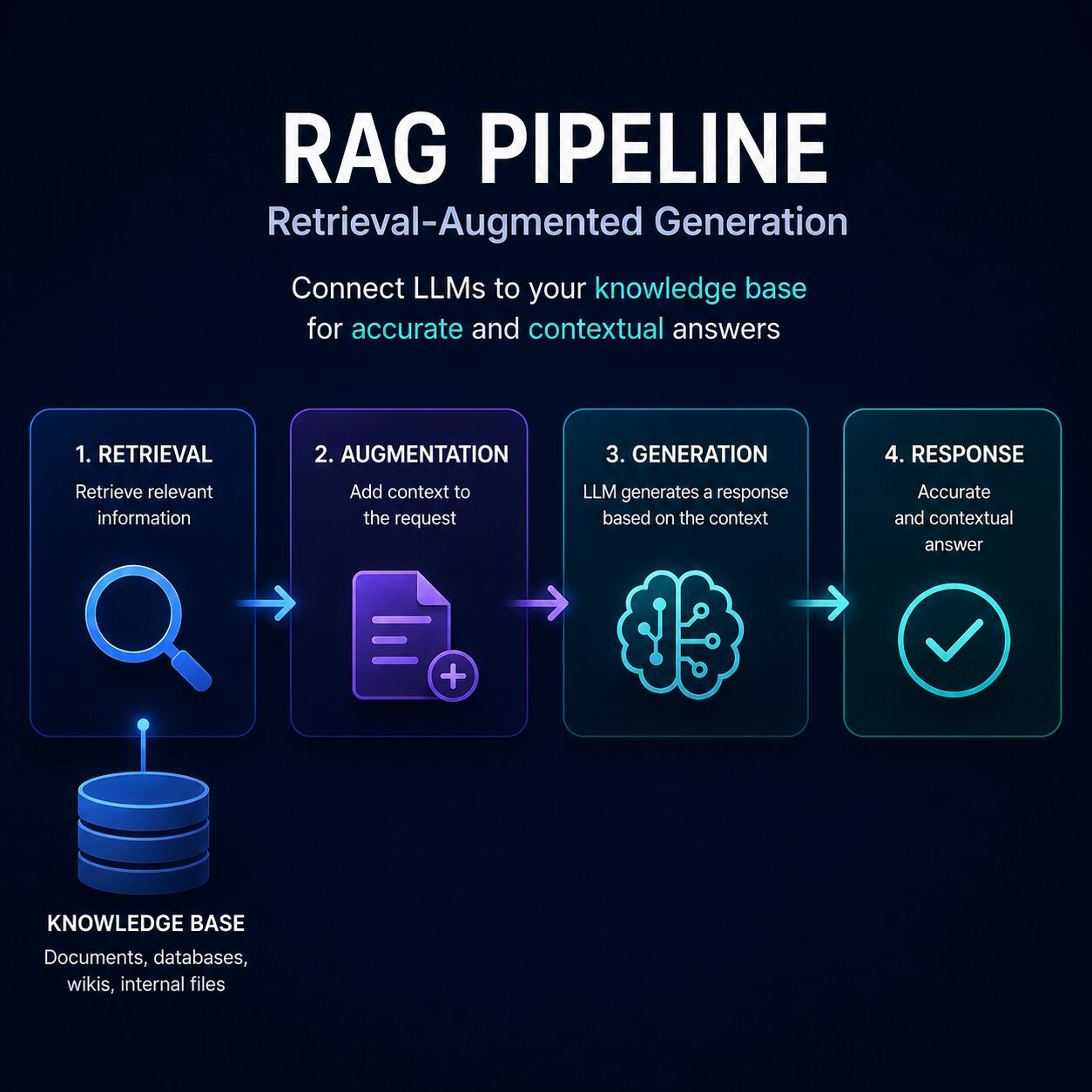
RAG Pipeline
Retrieval-Augmented Generation: connect LLMs to your knowledge base, documents, and databases for accurate, contextual answers
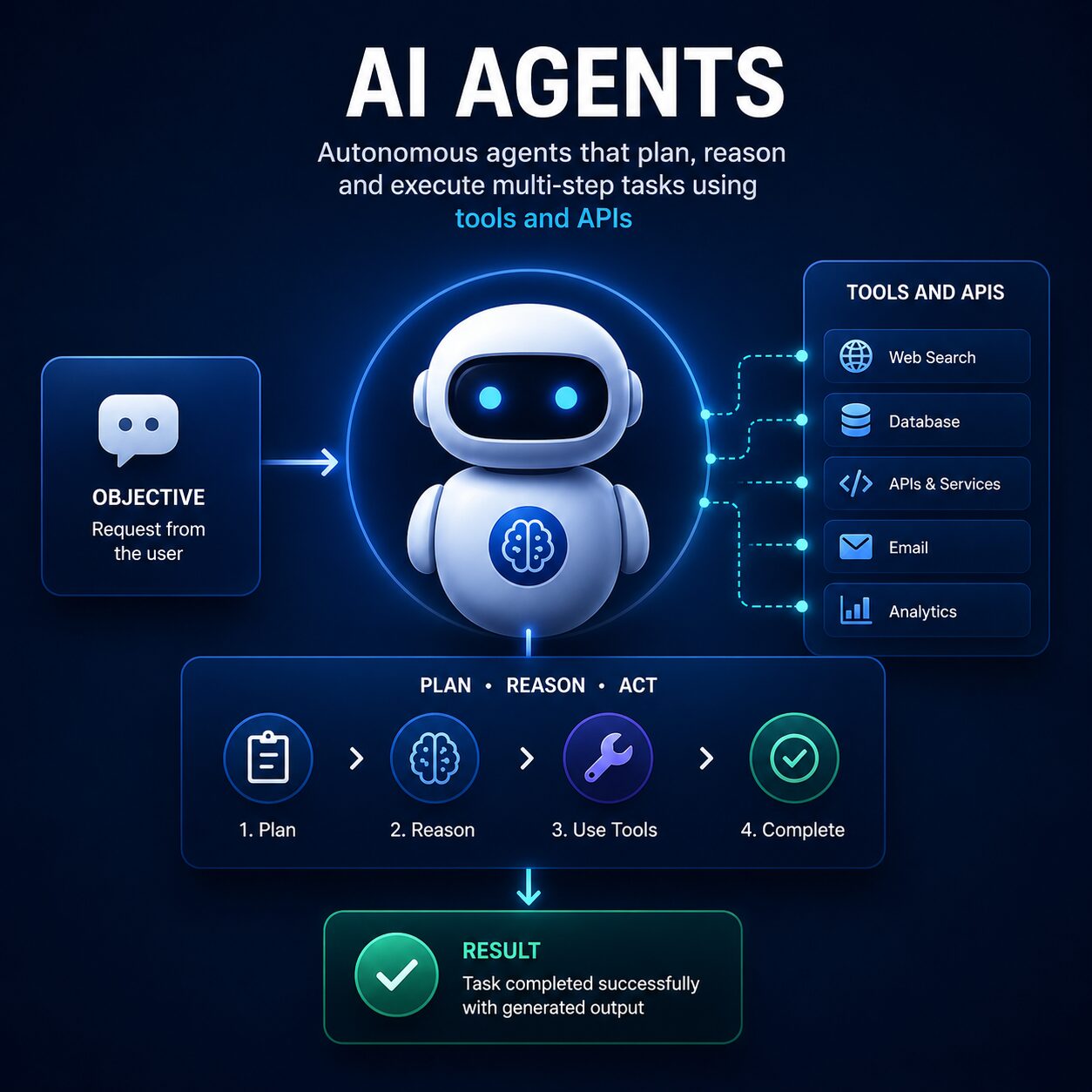
AI Agents
Autonomous agents that plan, reason, and execute multi-step tasks using tools and APIs

Document Intelligence
Extract, classify, and analyze information from documents (PDF, images, scanned files) using vision models and NLP

Multi-Model Routing
Intelligent routing between GPT-4, Claude, Gemini, and local models based on task, cost, and sensitivity

Prompt Management
Version-controlled prompt templates, A/B testing, evaluation frameworks, and guardrails for safe outputs

Monitoring & Observability
Cost tracking, latency monitoring, token usage analytics, quality scoring, and drift detection
Retrieval-Augmented Generation: AI That Knows Your Data
A generic LLM doesn’t know your business. RAG (Retrieval-Augmented Generation) bridges this gap by connecting AI models to your documents, databases, and knowledge base. When a user asks a question, the system retrieves relevant information from your data sources and provides it as context to the AI model.I design RAG pipelines with: hybrid search (semantic + keyword), metadata filtering, re-ranking for relevance, citation generation, and chunking strategies optimized for different document types. The result is an AI system that answers questions accurately — and cites its sources.
Custom AI Agents for Complex Workflows
Beyond simple Q&A, AI agents can execute multi-step workflows autonomously. A customer support agent can check order status, process refunds, and escalate complex issues. A content agent can research, draft, review, and publish articles. A data agent can query databases, generate reports, and send alerts.I build agent systems using the latest frameworks (LangGraph, CrewAI, or custom implementations) with: reflection loops for self-correction, human-in-the-loop approval gates for critical decisions, tool integration (APIs, databases, web search), and persistent memory for context across interactions.
Security, Privacy, and Compliance
AI introduces new risks: data leakage through prompts, hallucinated facts, biased outputs, and compliance violations. Every system I build includes: input/output guardrails that prevent sensitive data exposure, content filtering for harmful outputs, audit logging for every AI interaction, data anonymization for PII protection, and on-premise deployment options for regulated industries.For GDPR compliance, I implement data retention policies, the right to explanation, and opt-out mechanisms for automated decisions.
Measurable ROI, Not Tech for Tech's Sake
AI projects should be justified by business metrics. I work with you to define KPIs before development starts: cost per automated task, accuracy rates, response time improvements, customer satisfaction scores, or any metric relevant to your use case. Dashboards track these metrics in real time, so you see the return on your AI investment from day one.
Ready to move from AI experiments to production systems? Let’s identify the right use cases and build your AI strategy together.
Frequently Asked Questions about AI Solutions
Multi-model orchestration (LLM, vision, speech), chatbots and virtual assistants, document automation, predictive analytics, content moderation, RAG systems (Retrieval-Augmented Generation), and integration with third-party AI APIs (OpenAI, Anthropic, Google AI, open-source self-hosted).
Absolutely. I design every solution with privacy and security as core requirements: end-to-end encryption, data processed in the EU (GDPR compliant), self-hosting options for open-source models, and configurable data retention policies.
Yes, I support Llama, Mistral, Falcon, and other open-source models on your own infrastructure (on-premise or private cloud). This eliminates recurring API costs and gives you full control over your data.
Depending on complexity: from €2,000 for a simple AI assistant integrated via API, up to €10,000+ for multi-agent systems with RAG, persistent memory, self-hosting, and monitoring dashboard.
2-6 weeks for a working MVP. Complex projects with self-hosting, custom training, and multiple integrations require 8-12 weeks. Every project includes accuracy testing and prompt optimization.